

Quick Answer: Afterpay usually doesn’t affect your credit score when you use it normally and pay on time. The sign-up check is typically a soft credit check, not a hard one. But missed payments, unpaid balances, and debt collections can still cause real credit problems.
Afterpay is a buy now, pay later service. It lets you buy something today and split the cost into smaller payments. For many shoppers, that feels easier than paying the full price upfront.
But the big question is simple: Does Afterpay affect your credit?
The answer is not a clean yes or no. Most normal Afterpay use may not change your credit score. But if you miss payments or let the balance go unpaid, it can become a bigger problem. So, yes, Afterpay can be safe. But only if you treat it like real debt.
How Afterpay Can Affect Your Credit
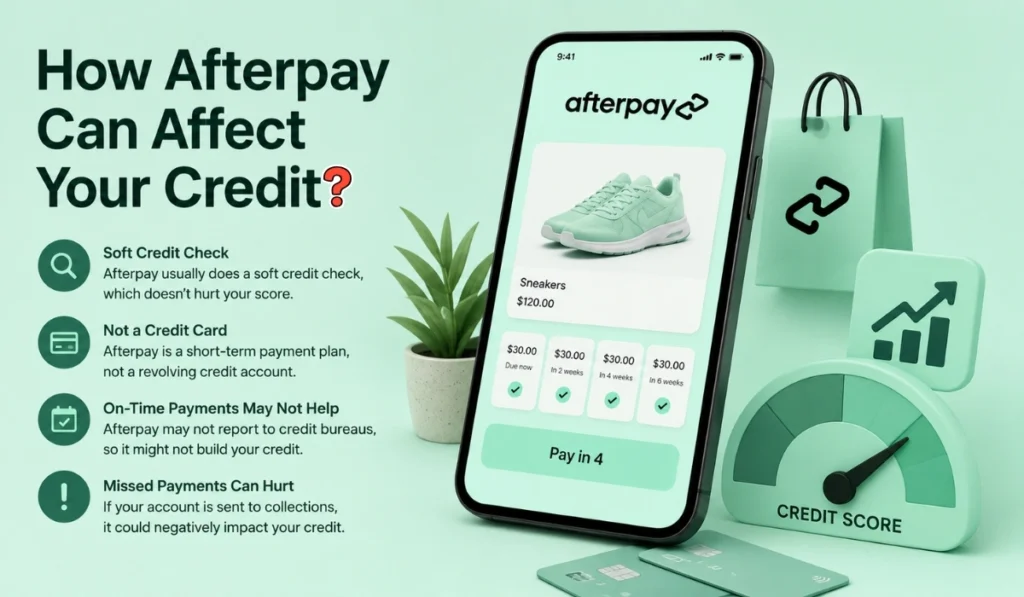
Afterpay is not the same as a credit card. It’s usually a short-term installment plan. You buy something, then pay it back in smaller payments over time.
The good news is that Afterpay typically performs a soft credit check when you sign up. This is just a quick background look that does not lower your credit score or show up on the public version of your credit report that lenders see.
A hard credit check is different. That usually happens when you apply for things like a credit card, car loan, mortgage, or personal loan. A hard check can lower your score a little for a short time. Afterpay’s standard sign-up process is not usually like that.
So no, signing up for standard Afterpay does not normally hit your credit like applying for a new credit card.
But here’s the part people miss: Afterpay also may not help your credit much. If your on-time payments are not reported to the major credit bureaus, they won’t build your credit history the way a credit card or loan can.
A simple way to think about it: Afterpay may help you split a payment, but it’s not really a credit-building tool.
When Afterpay May Not Affect Your Credit Score
Afterpay may not affect your credit score if you make all payments on time and keep your account in good shape. In that case, there may be no direct score change at all.
That can be helpful if you only need a short payment plan for a planned purchase. You’re not opening a normal credit card account. You’re not adding credit card utilization. And you’re not taking out a long-term loan.
Still, “no score damage” is not the same as “good for your credit.” That’s an easy trap. Paying Afterpay on time is good for your account and your budget, but it may not raise your FICO score or add positive payment history to your credit report.
If your goal is to build credit, you may need a different tool. A secured credit card, a low-limit credit card, or a credit-builder loan may work better if they report to the credit bureaus and you use them carefully.
The One Way Afterpay CAN Ruin Your Credit
This is the serious part. Afterpay may not hurt your credit during normal use, but unpaid debt can still come back to bite you.
If you are struggling with a payment or your account is restricted, the best move is to reach out to Afterpay Customer Service immediately to set up a payment plan before it hits your credit.
If you stop paying, Afterpay can limit your account, charge late fees, and keep trying to collect the balance. If the debt stays unpaid for too long, it may be sent to a third-party debt collector. That’s where the real credit risk starts.
Once a debt collector gets involved, the situation can become much more damaging. A collection account may appear on your credit report, and that can hurt your score badly. It can also make lenders nervous when you apply for a loan later.
So the danger is not always “Afterpay reported one late payment.” The danger is letting a small balance turn into an unpaid debt problem.
And honestly, that’s the part many people underestimate. A $25 or $50 missed payment may not sound like a big deal. But if it sits there, grows with fees, and moves into collections, it can become much more stressful than the original purchase was worth.
Afterpay vs Credit Cards: Which Affects Credit More?
Afterpay and credit cards both let you buy now and pay later, but they work in different ways. Credit cards usually have a bigger effect on your credit score because they are reported more often.
| Feature | Afterpay | Credit Card |
|---|---|---|
| Credit check | Usually soft check for standard sign-up | Usually hard check when applying |
| Credit building | Limited in many cases | Can build credit if used well |
| On-time payments | May not always be reported | Usually reported |
| Missed payments | Can lead to fees and collections | Can hurt credit directly |
| Interest | Usually no interest on standard plans | Interest can apply if you carry a balance |
| Credit utilization | Does not work like card limit usage | High balance can lower your score |
Credit utilization is a big one. With a credit card, using too much of your limit can hurt your score. For example, if your card limit is $1,000 and you use $900, that high balance can make your score drop.
Afterpay usually doesn’t work that way. You don’t have a normal revolving credit limit like a credit card. So using Afterpay does not usually affect your credit utilization ratio. That’s one clear plus.
But that doesn’t mean you should use it without thinking. Too many Afterpay plans can still make your monthly budget messy.
How to Use Afterpay Without Hurting Your Credit
The safest way to use Afterpay is to act like the money is already gone. If the full purchase does not fit your budget, splitting it into smaller payments does not magically make it affordable.
I always recommend linking Afterpay to a debit card rather than a credit card. Why? Because using a credit card to pay for a buy now, pay later service is debt on top of debt. Keep it simple and stick to what’s already in your bank account.
Also, try not to keep too many BNPL plans open at once. One payment plan can be easy to manage. Four or five at the same time can get annoying fast. Different due dates, different amounts, and different purchases can blur together.
Set payment reminders before each due date. Don’t rely only on memory. A simple phone reminder can save you from late fees and account issues.
Here’s the 2026 reality too: lenders are paying more attention to buy now, pay later payments. If you apply for a home loan, car loan, or personal loan, the lender may review your bank statements. Regular BNPL payments can be counted as monthly obligations, even if they don’t show as normal credit accounts.
That means Afterpay might not hit your score directly, but it can still affect how your finances look.
Keep in mind that even with a good credit score, your order can still get declined due to internal app glitches. You can find the most common solutions in our Afterpay Not Working Troubleshooting Guide.
FAQs About Afterpay and Credit
Does Afterpay build credit?
Usually, no. Afterpay may not report your on-time payments to the major credit bureaus. So paying on time can keep your account healthy, but it may not build your credit score.
Does Afterpay do a hard credit check?
For standard sign-up, Afterpay typically uses a soft credit check. A soft check does not lower your score and does not show up to lenders the same way a hard inquiry does.
Can missed Afterpay payments hurt my credit?
Yes, they can if the debt stays unpaid and moves to collections. The missed payment itself may not always show right away, but a collection account can damage your credit.
Can Afterpay affect a loan application?
Yes, in some cases. Lenders may look at your bank statements and count regular Afterpay payments as part of your monthly obligations. This can matter when they decide how much you can afford to borrow.
Final Thoughts
Afterpay does not usually affect your credit score when you use it the right way. The soft credit check does not lower your score, and normal payments may not show on your credit report.
But don’t treat it like free money. Missed payments, unpaid balances, and debt collectors are the real danger. If you use Afterpay, keep it simple. Buy only what you can afford, link it to a debit card, and stay ahead of the due dates.
Have you ever used Afterpay and wondered if lenders could see it later? Comment with the part that confused you most.